

OCI cardholders are expressly included in Rule 17(1) of the Immigration and Foreigners Rules, 2025. A hotel should therefore not treat an OCI card as a blanket exemption from accommodation reporting. The guest's travel authorization, any personal registration obligation and the property's reporting duty are different questions.
This guide is for Indian reception teams and homestay owners who need a calm, consistent way to welcome OCI guests. It explains the reporting distinction and proposes a review process; it does not determine a person's immigration status or confirm current authenticated portal fields.
Why the old advice can be confusing
A guest may remember an earlier visit when the property did not ask for OCI details. A staff member may have read that OCI holders are exempt from some registration requirements. Neither memory settles what the accommodation keeper must do under the current Rule 17.
Use the official Rules and current Form III portal notice for this accommodation-reporting question. The notice includes OCI cardholders. Explain the property's task without suggesting that the guest has done something wrong.
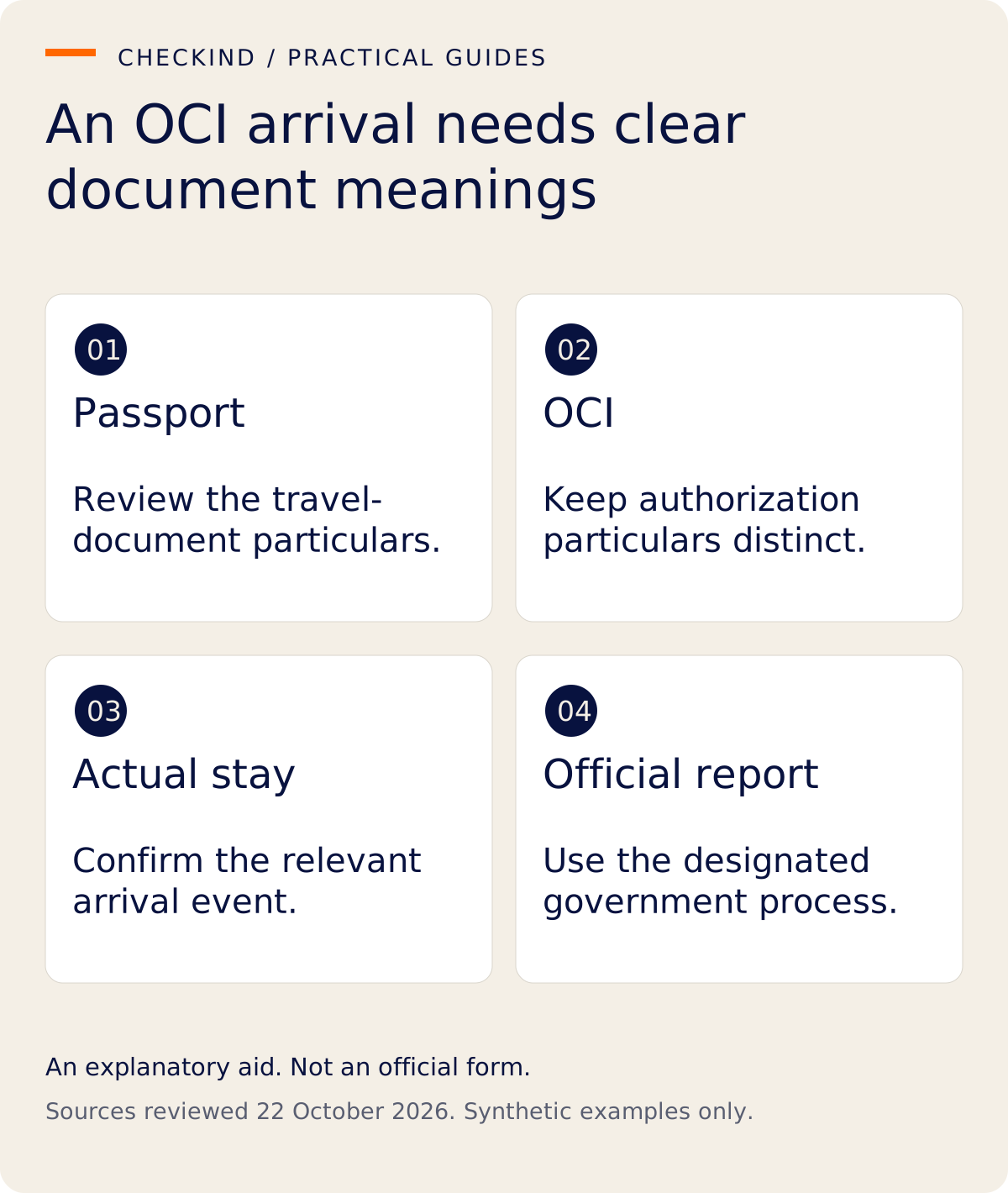
Keep passport and OCI information distinct
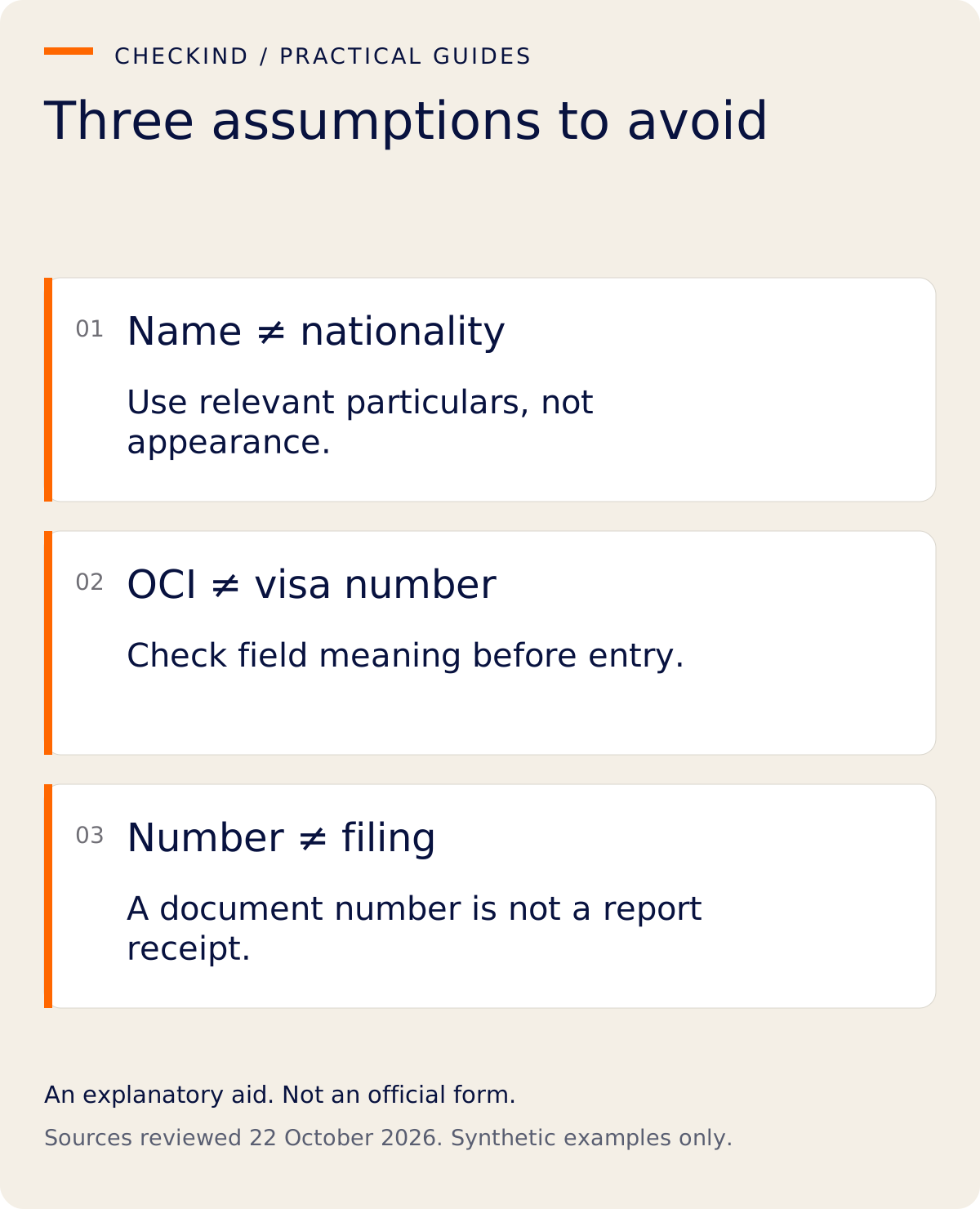
A passport identifies the travel document. An OCI card is a different document with its own particulars. The prescribed Form III schedule labels a field “Visa Number/OCI No.” This does not mean reception should copy an OCI number into every software field labelled visa number or invent a visa where none has been presented.
Before entering anything, identify the document and the meaning of the destination field. If your current software cannot represent the situation accurately, pause and ask your authorized reporting operator how to proceed. Do not create placeholder numbers merely to make a screen accept the record.
A suggested check-in conversation
“Welcome. We need to complete the property's guest registration and the applicable accommodation reporting. The current Form III process includes OCI cardholders. We will review the relevant document and stay details with you. Please tell us if anything is unclear.”
This wording is a suggested communication aid, not an official notice. Adapt it to the information the property genuinely needs and to its actual data-handling practices. Avoid saying “the government verifies you through our app” unless an authorized service and that precise action have been established.
A short reception review
The reviewer can work through the following sequence:
- Confirm that the stay belongs to the correct property and booking.
- Review the passport details against the document provided.
- Identify the OCI particulars separately; do not confuse them with a visa.
- Confirm what the guest has supplied and ask about unclear entries.
- Record actual arrival through the applicable process.
- Complete official reporting through the designated government route.
- Leave a clear handover for departure particulars and reporting.
Some operational steps depend on the property's circumstances. This checklist is not proof that all statutory requirements or document-verification duties have been met.
What if the guest has no Indian phone number?
Do not type a staff member's number as though it were the guest's contact information, or invent an email address to complete a form. Check the current official field rules and ask your authorized operator about the accepted handling of missing information.
The same principle applies to a document mismatch or uncertainty about a card. Ordinary reception software cannot resolve every immigration question. Escalate the question with only the information the authorized person needs, through an appropriate private channel.
A fictional example
An OCI guest arrives at illustrative Courtyard Stay with a foreign passport and OCI card. A new receptionist sees a box labelled “visa number” in an old worksheet. Instead of copying the OCI number without explanation, the receptionist asks the designated reviewer how the official process represents OCI.
The team records the particulars accurately and follows the applicable reporting route. The helpful behaviour is the pause and clarification; the example does not assert that any particular software or portal accepts a specific workaround.
What CheckInd currently supports
CheckInd supports digital foreign guest registration and document capture in its production-evidenced workflow. Its expanded OCI-specific path and Form III preparation remain in development. Do not buy or describe the current product on the assumption that these staging features are available. The Form III product page explains that boundary.
Questions owners ask
Can we decide applicability from the guest's name or appearance?
No. Do not substitute assumptions for the relevant particulars and current official requirements.
Does the OCI number prove that reporting has been completed?
No. A document number is a piece of information. It is not a filing receipt or confirmation of government acceptance.
Should we tell the guest to file the hotel's report?
Keep the keeper's reporting responsibility distinct from the guest's obligation to furnish information. Confirm the official process with the appropriate authority.
A useful staff exercise is to review a fictional OCI arrival before the next busy shift. Check where each piece of information belongs and write down who will answer exceptions.
General information for covered Indian accommodation. Not a complete property-specific compliance checklist; confirm uncertain procedures with the relevant authority.
- Immigration and Foreigners Rules, 2025; G.S.R. 596(E), 1 September 2025 — Rule 17(1), (5), (6), Form III schedule
- Immigration and Foreigners (Amendment) Rules, 2026; G.S.R. 424(E), 1 June 2026 — Amendments to Rules 12, 18 and 21; no amendment to Rule 17 in this instrument
- Official Form III public portal — Public notice includes OCI; no authenticated procedure tested
- CheckInd current Form III product boundary — Digital registration is available; expanded Form III preparation remains in development.